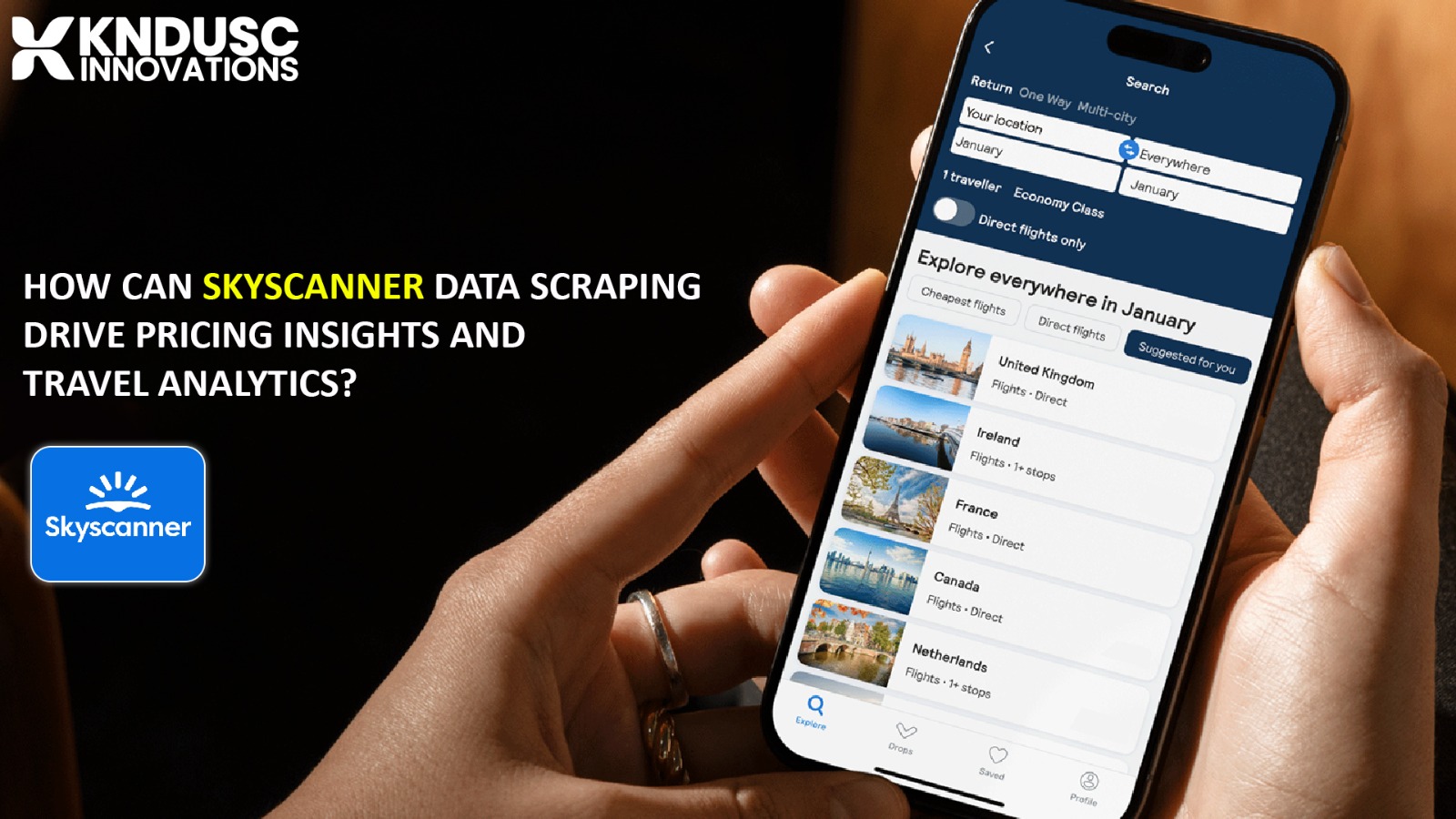
Global travel has entered a new era of data-driven competition. With travelers comparing hundreds of fares in seconds and airlines adjusting prices multiple times a day, the difference between winning and losing a booking often comes down to who has better intelligence and who acts on it faster. At the center of this global travel intelligence landscape sits Skyscanner, one of the world's most widely used flight and travel comparison platforms, connecting hundreds of millions of travelers with airlines, hotels, and car hire providers across every major market on the planet.
Every search query, price comparison, fare alert, and booking signal on Skyscanner generates data. And for airlines, travel agencies, hospitality businesses, and investors operating in global travel markets, that data holds the key to understanding pricing dynamics, traveler demand behavior, and competitive positioning at a depth that was previously only accessible to the largest players with the biggest research budgets.
Skyscanner data scraping is the process of systematically extracting this publicly available platform data and transforming it into structured, analysis-ready intelligence. In this blog, we explore exactly how this works, what insights it unlocks, and why it is becoming an essential capability for travel businesses competing in today's fast-moving, hyper-transparent global travel markets.
Why Skyscanner? Understanding the Platform's Data Richness
Before diving into how data scraping works, it is worth understanding why Skyscanner specifically represents such a valuable data source for travel analytics.
Global Market Leadership
- Skyscanner operates across more than 30 languages and 70 currencies, making it one of the few platforms with genuinely global pricing visibility from a single source
- Its user base spans every major travel market from North America and Europe to Southeast Asia, the Middle East, and Latin America, reflecting the genuine travel preferences of hundreds of millions of real global travelers
- Data from Skyscanner provides insights that are highly relevant to both global trends and market-specific travel patterns something regional OTAs often fail to capture with the same international breadth
Multi-Vertical Data Coverage
- Unlike single-category platforms, Skyscanner spans flights, hotels, and car hire bookings under one roof
- This multi-vertical presence means scraped data reflects a holistic view of how travelers plan, compare, and book across an entire trip lifecycle
- Cross-vertical data analysis reveals insights about combined travel behavior that single-category platforms simply cannot provide
Aggregator-Level Pricing Transparency
- As a metasearch engine, Skyscanner aggregates fares from hundreds of airlines, OTAs, and direct booking channels simultaneously
- This creates a uniquely comprehensive and transparent pricing dataset for businesses seeking full-market competitive intelligence
- Understanding Skyscanner's fare landscape reveals how global travelers respond to price differences between direct channels and third-party booking options
What Data Can Be Scraped from Skyscanner?
Skyscanner generates a wide and varied range of publicly accessible data points across its platform verticals:
Flight Data
- Route-level pricing across all operating carriers, cabin classes, and booking channel sources
- Fare availability by departure date, booking window, and seat class
- Outbound and return fare combinations showing how round-trip pricing differs from one-way structures
- Price change frequency and magnitude across different booking periods and demand cycles
- Cheapest day and cheapest month fare calendar data showing how prices shift across an entire departure window
- Low-fare alert patterns and price drop notification structures
Hotel & Accommodation Data
- Property listings including star ratings, location, and facility details across global destinations
- Room type pricing across different stay lengths, occupancy combinations, and booking channel sources
- Rate comparisons between OTA-sourced fares and direct booking options surfaced on the same platform
- Availability signals for hotels in key Skyscanner destination markets
- Guest review scores and satisfaction metrics for competing properties by destination
Car Hire Data
- Vehicle category pricing across rental providers at major airports and city locations globally
- Availability patterns for different vehicle classes during peak and off-peak travel periods
- Supplier-level rate comparisons at major travel hubs and popular drive-to destinations
- Cancellation policy and booking condition variations across car hire providers
Fare Alert & Demand Signal Data
- Search volume signals revealing which routes and destinations are attracting growing traveler interest
- Fare alert trigger frequencies indicating which price thresholds travelers are setting for key routes
- Price drop notification patterns showing how often fares on specific routes fall below demand thresholds
- Trending destination signals emerging from aggregate search behavior across the platform
Promotional & Deal Data
- Flash deal structures including discount depth, duration, and eligible inventory
- Promotional fare patterns during major global travel booking periods and seasonal campaigns
- Price comparison differentials between direct airline fares and OTA-sourced alternatives on the same routes
- Bundle and package deal pricing for combined flight and hotel offerings across key destinations
How Skyscanner Data Scraping Drives Pricing Insights
Pricing in global air travel and accommodation markets is extraordinarily dynamic. Fuel costs, capacity management, competitive pressure, seasonal demand, and macroeconomic shifts all create a pricing environment that changes by the hour. Skyscanner data scraping gives businesses the tools to navigate this complexity with precision.
Real-Time Fare Monitoring Across Global Markets
- Track flight fares simultaneously across hundreds of routes and all competing carriers in real time
- Detect competitor price movements as they happen and respond before losing bookings to better-positioned rivals
- Monitor fare parity between Skyscanner listings and direct airline booking channels to identify revenue leakage
- Capture intraday pricing behavior during high-demand periods like school holidays, major events, and flash sales
Booking Window Price Curve Analysis
- Map exactly how airfares change at different intervals before travel dates across all major routes
- Identify the optimal booking window for each route where fares are typically at their lowest point
- Understand how airlines adjust fares as departure dates approach and seat availability tightens
- Use booking window intelligence to time promotional campaigns for maximum conversion impact
- Analyze how price curves differ between leisure-dominated and business-dominated route profiles
Promotional Pricing Intelligence
- Decode Skyscanner's fare landscape during major promotional periods including Black Friday, summer booking peaks, and January sale windows
- Measure the depth and duration of discount offers across flight routes and hotel categories
- Identify which route types and price tiers attract the deepest promotional discounts from competing carriers
- Benchmark your promotional fare positioning against competitors during major global sale events
Currency & Cross-Market Pricing Analysis
- Compare pricing across Skyscanner's regional markets to identify cross-border fare arbitrage opportunities
- Track how currency fluctuations influence displayed fares and traveler demand across different origin markets
- Identify markets where pricing in one currency creates significant demand imbalances relative to comparable markets
- Build multi-currency fare monitoring models that reflect real global market dynamics and traveler price sensitivity
Yield Management & Revenue Optimization
- Use scraped availability and fare data to build sophisticated yield management models at the route level
- Identify periods of high demand with insufficient fare elevation and correct revenue leakage before it compounds
- Track competitor yield strategies during peak booking periods to benchmark your own revenue performance
- Feed live Skyscanner pricing data into automated revenue management systems for continuous optimization
Travel Analytics Powered by Skyscanner Data
Beyond pricing, Skyscanner data unlocks a broader layer of travel analytics that helps businesses understand markets, travelers, and opportunities with far greater depth than was previously possible.
Destination Popularity & Demand Mapping
- Track which destinations are gaining search and booking momentum across global travel markets
- Identify emerging travel corridors before they become saturated with new route launches and competing capacity
- Map seasonal demand curves for every major destination to plan inventory and marketing spend timing
- Detect demand shifts driven by new airline routes, visa policy changes, currency movements, or major cultural events
Traveler Sentiment & Review Analytics
- Analyze thousands of hotel and experience reviews to extract sentiment patterns across service categories
- Identify the most frequently praised and criticized aspects of properties and destinations by market
- Track review sentiment trends over time to detect improving or deteriorating property and destination performance
- Benchmark your review profile against competing properties to understand traveler perception gaps
Accommodation Supply & Inventory Analysis
- Monitor new hotel inventory additions and supply growth in your target destination markets
- Track occupancy signals through availability data scraping across competing properties on the platform
- Identify supply-demand imbalances where limited inventory is meeting strong inbound traveler demand
- Assess market saturation risk before entering new destinations or committing to new property categories
Flight Route & Connectivity Intelligence
- Map airline route networks serving key Skyscanner destinations and identify connectivity gaps
- Track new route launches and their downstream impact on destination demand and hotel pricing
- Analyze fare competition between carriers on high-demand corridors across every major global market
- Identify underserved routes where strong search demand is not yet matched by sufficient seat supply
Travel Trend Forecasting
- Combine historical Skyscanner fare and search data with current platform signals to build forward-looking demand models
- Forecast peak travel periods with greater accuracy using real fare behavior and search volume data
- Anticipate the impact of global events, regional holidays, and macroeconomic shifts on travel demand across markets
- Build destination-level travel demand forecasts that inform route planning, hotel investment, and marketing decisions
Business Use Cases: Who Uses Skyscanner Data and How
Hotels & Resort Chains
- Use flight search volume trends toward your destination as an early demand signal for hotel revenue management
- Track which origin markets are showing strong inbound flight interest and tailor marketing accordingly
- Identify demand surges early through flight booking momentum and apply dynamic room pricing before competitors react
- Benchmark occupancy signals and availability patterns against competing properties in your destination market
Airlines & Low-Cost Carriers
- Track route-level fare competition across all carriers and booking channels simultaneously in real time
- Monitor competitor promotional campaigns and respond with targeted fare adjustments before demand shifts
- Analyze booking window behavior to optimize fare release strategies and maximize revenue per available seat
- Identify new route opportunities based on destination search demand signals surfaced through Skyscanner data
Online Travel Agencies & Booking Platforms
- Monitor how your fare positioning compares against direct airline channels and rival OTAs on the same routes
- Build smarter package bundles by analyzing which flight and hotel combinations are most searched together
- Track competitor OTA pricing and promotional strategies across key global and regional markets
- Identify high-margin route and destination categories where demand exceeds current supply on the platform
Tour Operators & Destination Management Companies
- Analyze destination search trends and flight connectivity growth to identify emerging inbound markets
- Track seasonal demand patterns to plan tour schedules and inventory around confirmed peak travel periods
- Use fare trend data to time promotional campaigns for maximum booking conversion at the right price point
- Monitor competitor destination offerings and pricing to differentiate your product positioning effectively
Travel Tech & Fare Prediction Companies
- Power dynamic fare prediction engines with live Skyscanner fare and availability data feeds at the route level
- Build recommendation systems using destination popularity signals and traveler search preference patterns
- Develop market intelligence dashboards fed by continuously updated Skyscanner data pipelines
- Create fare forecasting tools using historical booking window and price curve data across global routes
Hospitality Investors & Private Equity
- Assess hotel asset performance potential in destinations showing strong and sustained Skyscanner flight search growth
- Identify high-growth destination markets where rising air connectivity is driving incremental traveler demand
- Evaluate acquisition targets by analyzing destination-level demand trends and competitive positioning on Skyscanner
- Monitor portfolio market performance against broader destination demand benchmarks using live platform data
Key Advantages of Skyscanner Data Over Other Global Sources
What makes Skyscanner data particularly valuable compared to other global travel data sources?
True Aggregator-Level Market Visibility
- Skyscanner's metasearch model means a single data extraction point provides pricing from hundreds of airlines and OTAs simultaneously
- No other data source offers equivalent competitive pricing visibility across global routes from a single platform, making it uniquely efficient for broad market intelligence
Rich Demand Signal Intelligence
- As a platform where travelers actively search before they book, Skyscanner captures intent signals that booking data alone cannot provide
- Search volume trends are leading indicators of demand shifts, giving businesses advance notice that only shows up in booking data weeks later
Global Coverage with Route-Level Granularity
- Skyscanner's simultaneous operation across dozens of languages and markets means global insights can be segmented to route-level or origin-market precision
- This combination of global breadth and local depth is extremely difficult to replicate from any other single data source available to travel businesses
Transparent Competitive Pricing Landscape
- Because Skyscanner surfaces fares from direct channels and OTAs side by side, scraped data reveals the full competitive pricing landscape in a way that airline-only or OTA-only sources cannot
- This makes Skyscanner data uniquely valuable for price parity monitoring, revenue leakage detection, and competitive positioning analysis across global markets
Real-Time Skyscanner Travel Data Intelligence Reference Dataset
| Record ID | Airline | From City | To City | Departure Date | Return Date | Class | Price ($) | Discount (%) | Stops | Duration (hrs) | Booking Trend | Availability | Platform |
|---|---|---|---|---|---|---|---|---|---|---|---|---|---|
| SK001 | Emirates | Dubai | London | 2026-04-10 | 2026-04-18 | Economy | 780 | 12% | Non-stop | 7.5 | High | Available | Skyscanner |
| SK002 | Qatar Airways | Doha | New York | 2026-04-12 | 2026-04-22 | Economy | 950 | 10% | 1 Stop | 14 | Medium | Available | Skyscanner |
| SK003 | Singapore Airlines | Singapore | Sydney | 2026-04-08 | 2026-04-16 | Business | 1,850 | 15% | Non-stop | 8 | High | Limited | Skyscanner |
| SK004 | Lufthansa | Frankfurt | Toronto | 2026-04-15 | 2026-04-25 | Economy | 720 | 8% | 1 Stop | 11 | Medium | Available | Skyscanner |
| SK005 | Air India | Delhi | San Francisco | 2026-04-20 | 2026-05-01 | Economy | 1,050 | 18% | Non-stop | 16 | High | Limited | Skyscanner |
| SK006 | British Airways | London | Paris | 2026-04-05 | 2026-04-10 | Economy | 120 | 5% | Non-stop | 1.5 | Low | Available | Skyscanner |
| SK007 | Turkish Airlines | Istanbul | Berlin | 2026-04-09 | 2026-04-14 | Economy | 200 | 10% | Non-stop | 2.5 | Medium | Available | Skyscanner |
| SK008 | Delta Airlines | New York | Los Angeles | 2026-04-11 | 2026-04-15 | Economy | 350 | 14% | Non-stop | 6 | High | Available | Skyscanner |
| SK009 | Etihad Airways | Abu Dhabi | Mumbai | 2026-04-07 | 2026-04-12 | Economy | 280 | 9% | Non-stop | 3 | Medium | Available | Skyscanner |
| SK010 | Air France | Paris | Rome | 2026-04-13 | 2026-04-17 | Economy | 180 | 7% | Non-stop | 2 | Low | Available | Skyscanner |
Why Choose KNDUSC for Skyscanner Data Scraping?
KNDUSC delivers enterprise-grade Skyscanner data scraping solutions built specifically for the complexity and scale of global travel markets.
Global Multi-Market Extraction Capability
Simultaneously extract data across all major Skyscanner markets in local currencies and languages without data quality degradation or market-specific gaps from North America and Europe to Southeast Asia, the Middle East, and Latin America.
Cross-Vertical Data Coverage
Capture flight, hotel, and car hire data from a single integrated extraction pipeline eliminating the need for multiple fragmented data vendors and delivering a unified view of the full traveler journey.
Real-Time & Scheduled Data Delivery
Access continuously refreshed fare and availability data through automated pipelines or scheduled batch deliveries aligned with your operational requirements from intraday pricing updates to weekly competitive benchmarking.
Structured & Analysis-Ready Outputs
Receive clean, validated, and fully structured datasets delivered in CSV, JSON, or direct API format ready for immediate integration with BI platforms, revenue management systems, and fare prediction engines.
Custom Intelligence Solutions
Tailored extraction configured around your specific markets, route networks, competitive sets, property categories, and unique analytical requirements no one-size-fits-all data feeds.
Responsible & Compliant Scraping
KNDUSC operates within ethical data collection frameworks respecting platform guidelines, international data privacy regulations, and GDPR standards across all markets and jurisdictions.
Conclusion
Global travel is one of the most data-intensive and competitively transparent industries in the world. Skyscanner sits at the center of this ecosystem, generating millions of fare signals, demand indicators, traveler search behaviors, and competitive pricing data points every single day.
For travel businesses, hotels, airlines, and investors operating in global markets, Skyscanner data scraping is no longer a nice-to-have capability. It is a fundamental competitive requirement for anyone serious about understanding and winning in today's fast-moving travel markets.
From real-time fare intelligence and booking window analysis to destination demand forecasting and route-level competitive benchmarking, structured Skyscanner data transforms raw platform activity into a powerful engine for smarter decisions and stronger growth.
With the right data partner, travel businesses can:
- Build dynamic pricing strategies grounded in real global market signals
- Anticipate demand shifts before they impact revenue and occupancy
- Outmaneuver competitors with faster, more accurate fare and market intelligence
- Make confident route expansion and investment decisions backed by live platform data
At KNDUSC, we help travel businesses unlock the full intelligence potential of Skyscanner through scalable, reliable, and customized data scraping solutions turning the world's most widely used travel comparison platform into your most powerful competitive advantage.
Frequently Asked Questions (FAQ)
1. What is Skyscanner data scraping?
Skyscanner data scraping is the automated extraction of publicly available travel data from the Skyscanner platform including flight fares, hotel rates, car hire pricing, traveler reviews, availability data, and promotional offers to create structured datasets for pricing intelligence and travel analytics.
2. Which markets does Skyscanner data cover?
Skyscanner operates across more than 30 languages and 70 currencies globally, making scraped data highly valuable for businesses seeking travel market intelligence across North America, Europe, Southeast Asia, the Middle East, Latin America, and beyond all from a single platform source.
3. How is Skyscanner data different from airline or OTA data?
Skyscanner's metasearch model aggregates fares from hundreds of airlines and OTAs simultaneously, providing a complete competitive pricing landscape that airline-only or OTA-only data sources cannot match. It also captures traveler search intent signals before bookings are made a leading indicator that most other data sources miss entirely.
4. What business problems can Skyscanner data solve?
Skyscanner data helps businesses solve dynamic pricing challenges, fare forecasting, route-level competitive benchmarking, demand mapping, traveler sentiment analysis, yield management optimization, and promotional strategy development across global travel markets.
5. How frequently should Skyscanner data be updated?
Flight fare and hotel rate data should be refreshed in real time or at minimum daily. Demand trend and competitive benchmarking data can be updated weekly or monthly depending on the pace of change in your target routes and markets.
6. Can Skyscanner data support investment decisions in global hospitality?
Absolutely. By analyzing destination demand trajectories, flight search volume trends, fare pricing signals, and competitive supply data from Skyscanner, investors can assess market opportunity, evaluate asset performance potential, and make more confident capital allocation decisions.
7. Is Skyscanner data scraping legal?
KNDUSC extracts only publicly available data from Skyscanner while adhering to responsible scraping practices, platform terms of service, and applicable international data privacy regulations ensuring compliant and ethical data collection at every stage.
8. How does KNDUSC deliver Skyscanner data?
KNDUSC delivers structured Skyscanner data via CSV, JSON, or API integration fully compatible with business intelligence platforms, revenue management systems, fare prediction engines, and investment analytics tools used by travel businesses worldwide.